 EN
EN

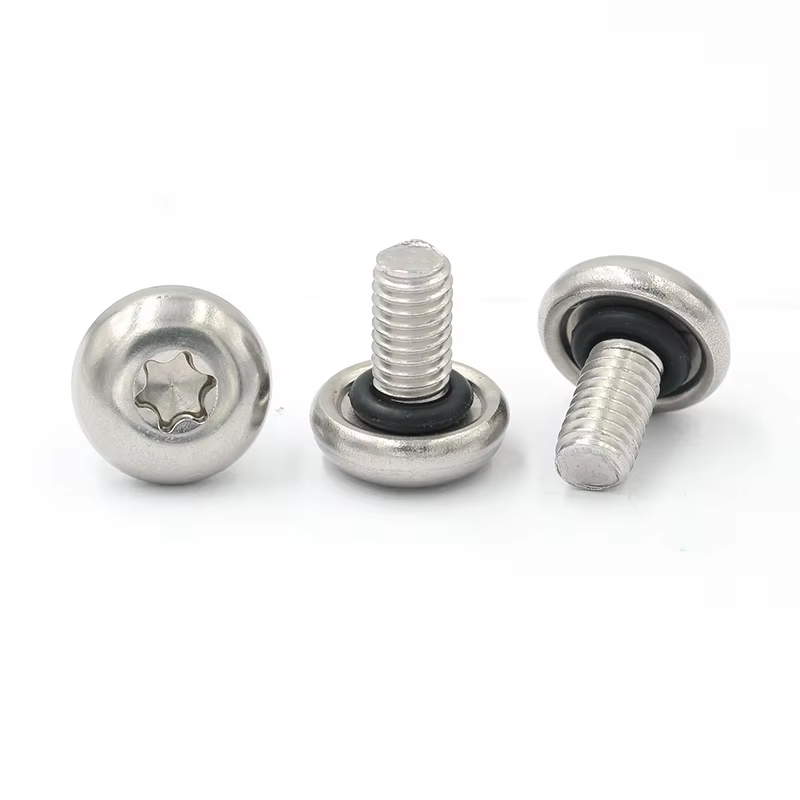
Understanding Countersunk Sealing Screws: Function, Design, and Performance Requirements
What is a Countersunk Sealing Screw and How It Works
Countersunk sealing screws have those cone-shaped heads with built-in seals like O rings or compression washers that make everything watertight when mounted flush against surfaces. When these screws get installed, their angled tops fit right into the countersunk holes without sticking out, and at the same time they squeeze the seal material to stop water from getting in. The specs sheets for industrial fasteners all mention how useful these are because they do two jobs at once. That's why we see them everywhere on boats, outside electrical boxes, and wherever there's a need to keep rust away from sensitive components over long periods.
The Importance of Flush Finish in Waterproofing and Aesthetic Performance
A flush fit keeps water from collecting and reduces the risk of crevice corrosion, which means surfaces stay dry even when exposed to harsh conditions. This matters a lot in places like coastal areas or chemical processing plants where constant exposure to moisture is part of daily operations. Raised heads tell another story altogether. They tend to collect water and dirt over time, which speeds up the breakdown process significantly. The smooth surface isn't just about practical benefits either. Architects and designers working with metals appreciate how these finishes meet premium aesthetic requirements. Same goes for manufacturers of consumer electronics who need hardware components that blend seamlessly into their products while still standing up to regular use and handling.
Key Performance Requirements for Sealing Screws in Wet and Corrosive Environments
When it comes to sealing screws, there are really three main things that need to work together properly. First, they need good corrosion resistance at the material level. For saltwater environments, A4 stainless steel is often the go-to choice. Then there's mechanical strength needed to keep that clamping force intact even when vibrations are present. Most structural joints need at least 25 Nm torque to stay secure. And finally, these screws have to last through extreme temperature ranges from as cold as -40 degrees Celsius all the way up to +120 degrees. The marine engineering field has strict standards for these components. They typically demand more than 500 hours of exposure in salt spray tests just to pass basic requirements. Another big concern is galvanic corrosion when different materials come into contact. This problem actually causes failures in about 38 percent of poor quality installations according to a study published in the Marine Engineering Journal back in 2023.
Material Selection for Maximum Durability: Stainless Steel, Coated Steel, and Polymer Options
Stainless Steel vs. Brass vs. Coated Steel: Comparing Corrosion Resistance and Strength
When it comes to tough environments where materials get put through their paces, stainless steel stands out as the go-to option. It can handle saltwater corrosion roughly two to three times better than brass does, which makes all the difference in coastal areas or industrial settings near the sea. Brass has its advantages though, especially when electrical conductivity matters for grounding purposes. The problem? Acidic conditions cause something called dezincification that eats away at brass over time, which is why we don't see it used much in certain manufacturing sectors anymore. For budget-conscious projects in relatively dry places or areas with just moderate humidity levels, coated carbon steel mixed with zinc aluminum alloys works pretty well economically. But once things get really wet or chemically harsh like in full marine environments, these coatings just aren't enough to stand up to what Mother Nature throws at them.
| Material | Corrosion Resistance (ASTM B117 Salt Spray Hours) | Tensile Strength (MPa) | Best Applications |
|---|---|---|---|
| A4 Stainless Steel | 1,500+ | 700–1,000 | Marine, offshore, wastewater |
| Hot-Dip Galvanized | 300–600 | 500–900 | Structural framing, dry climates |
| Brass | 100–200 | 400–600 | Low-stress electrical components |
| Polymer | Non-corrosive | 50–120 | Light-duty UV-exposed assemblies |
A2/A4 Stainless Steel and Polymer Screws in Harsh Outdoor and Marine Conditions
A4 (316L) stainless steel maintains 97% of its mechanical integrity after five years in marine exposure, significantly outperforming A2 (304) grades in chloride-rich environments. Polymer alternatives like PEEK or PVDF offer excellent chemical resistance and eliminate oxidation risks but lack the tensile strength required for structural roles.
Balancing Mechanical Strength and Environmental Resistance
High-grade stainless steels resolve the trade-off between strength and corrosion resistance by delivering over 1,000 MPa tensile strength alongside passive oxide layer protection. For coastal infrastructure, research confirms A4 stainless steel delivers a 40-year service life five times longer than epoxy-coated carbon steel equivalents, which typically last only 8–12 years.
Industry Paradox: High-Tensile Steel With Poor Corrosion Protection
Despite achieving tensile classes of 10.9 or 12.9, many carbon steel sealing screws rely on inadequate zinc coatings that degrade within 2–3 years in humid conditions. This mismatch leads to premature joint failures even when initial clamping force is sufficient, underscoring the importance of rigorous material specification in mission-critical applications.
Corrosion Resistance Explained: Coatings, Test Data, and Real-World Longevity
How material composition and coatings impact long-term durability
The battle against corrosion starts with what material we're working with. Take A4 stainless steel for instance it creates this protective chromium oxide layer that basically heals itself when damaged. Coated carbon steel works differently, relying instead on these sacrificial coatings such as zinc-nickel mixes or epoxy layers to protect the metal underneath. Now polymers are interesting because they don't oxidize at all, but there's always a tradeoff here they just aren't as strong mechanically. Let's look at actual field performance too. If left unprotected, carbon steel will start showing pits and corrosion marks in about half a year if placed near saltwater areas. Meanwhile, good quality A4 stainless steel can hold up without major structural issues for twenty years or more under similar conditions.
Salt spray test data: A4 stainless steel outperforms coated carbon steel by 500+ hours
ASTM B117 tests show that A4 stainless sealing screws can stand up to red rust for over 1,500 hours, which beats out good quality coated carbon steel that lasts around 950 to 1,100 hours. That's actually about a 55% edge in corrosion resistance. The extra durability makes these screws really popular for parts that get constantly wet underwater, like those bilge pump housings on boats. While coated carbon steel still works fine indoors or in places people can check regularly, it just doesn't hold up when there's no chance to spot problems early.
Are polymer sealing screws viable for structural outdoor applications?
Polymer screws stop galvanic corrosion problems and work pretty good in harsh chemical environments, though they do have some serious mechanical weaknesses. Take glass filled nylon for example it loses about 40 percent of its tensile strength when temps drop below freezing point, which basically means these won't hold anything heavy if installed in cold climates. Still there's room for these plastic screws outside structures where weight isn't so critical. We've seen UV stabilized versions last quite a while on things like composite deck trim pieces and mounting brackets for solar panels. Metal screws just couldn't cut it there before because they rusted out so fast from all that moisture exposure.
Seal Integrity and O-Ring Material Compatibility in Dynamic Environments
Choosing the Right O-Ring Material (EPDM, Silicone, NBR) for UV, Moisture, and Temperature Exposure
How well a seal works really comes down to whether the rubber material can handle what it's exposed to in the environment. EPDM stands out when dealing with sunlight outdoors, keeping its stretchiness even at temperatures around 125 degrees Celsius and holding up against constant dampness. For those static seals used in boats and ships, silicone is usually the go to choice because it doesn't break down from ozone or bad weather conditions, although it doesn't last as long when there's lots of movement involved. NBR rubber does great against oils and fuels, but gets pretty unreliable when temperatures swing wildly back and forth. According to research published last year, nearly seven out of ten seal problems in places where different chemicals mix happen simply because the rubber wasn't compatible with whatever fluids were present. That makes picking the right materials absolutely critical for anyone working with these systems.
Maintaining Seal Integrity Under Thermal Cycling and Vibration Stress
When there are differences in how materials expand with heat, this actually cuts down on the compression force of O-rings by somewhere around 18 to 22 percent when temperatures fluctuate back and forth (as noted in an IEEE Robotics Study from 2023). For those vibrating environments we see on offshore platforms, the fluoroelastomer or FKM type O-rings tend to maintain their shape much better over time compared to regular NBR ones. After going through about ten thousand vibration cycles, these FKM rings show roughly forty percent less compression set issues. Engineers dealing with complicated stress situations have started creating seals that mix different materials together. They combine EPDM material which holds up well against sunlight exposure with silicone that handles extreme temperatures pretty well. This combination approach gives better performance across various environmental conditions where equipment might need to operate reliably day after day.
Applications and Best Practices: Marine, Outdoor, and Industrial Use Cases
Common Uses of Countersunk Sealing Screws in Marine and Metalwork Applications
Countersunk sealing screws find their place wherever water tightness matters most and corrosion is a big concern. These screws hold down hatches and protect navigation equipment on offshore platforms that face extreme conditions with chloride concentrations reaching around 35,000 ppm. More and more engineers are specifying them for aluminum gangways too. The thing is, these applications need careful attention to torque settings - usually under 120 Nm so the material doesn't get damaged during installation. When it comes to metal roofs, flush mounted fasteners make all the difference. They keep dirt and moisture from collecting in those awkward spaces between panels. According to industry standards from NACE back in 2023, this approach cuts down on galvanic corrosion risks by roughly 40% when compared to traditional fasteners that stick out.
Case Study: Offshore Lighting Enclosures Using A4 Stainless Steel Sealing Screws
The North Sea oil rigs saw something interesting happen in 2022 when they started using those A4 (316) stainless steel sealing screws on their lighting enclosures. What stood out was how well these screws performed in real world conditions. The ones with built-in EPDM seals kept most of their compression power even after sitting in salt air for nearly 18 months where chloride levels regularly hit over 5,000 mg per cubic meter. That's pretty impressive considering what happens to other materials in such harsh environments. Meanwhile, the regular zinc-nickel coated carbon steel screws began showing signs of corrosion and pitting within just half a year. Nobody had to replace any sealants during this time across all 1,200 plus units installed. Based on this experience, engineers now consider A4 screws suitable for those tough ISO 12944 C5-M rated marine applications where equipment needs to withstand extreme coastal conditions.
Design Strategy: Preventing Galvanic Corrosion in Mixed-Material Assemblies
To mitigate galvanic corrosion in aluminum-to-steel connections:
- Use insulating nylon washers to interrupt electrical pathways
- Select fastener materials within 0.15V nobility difference (per ASTM G82)
- Apply sealants with >85% solids content to limit oxygen availability
Studies show that 150μm PTFE-coated sealing screws reduce galvanic current density by 73% compared to uncoated variants in aluminum/steel assemblies (MMTA 2023).
Performance Trend: Shift Toward Integrated, All-In-One Corrosion-Resistant Fasteners
According to Frost & Sullivan, the market for pre-sealed fasteners designed to resist corrosion saw an impressive 19% growth last year, mainly because of increasing needs from marine industries and renewable energy projects. Today's advanced versions typically feature A4 or ASTM F593 stainless steel construction, along with seals made from a combination of EPDM and Viton material that are joined through laser welding techniques. Some models also come with special coatings applied via micro-arc oxidation processes, usually under 15 microns thick. What makes these integrated systems so valuable is that they reduce installation times significantly, around 40% according to field reports, while still meeting tough IP68 standards. This matters a lot in real world applications like offshore wind turbines where reliability counts, as well as in desalination plants where parts need to function properly even when completely underwater.
FAQ
What are countersunk sealing screws?
Countersunk sealing screws are fasteners with cone-shaped heads and built-in seals designed to create a watertight seal when installed flush against surfaces.
What materials are best for countersunk sealing screws in marine environments?
A4 stainless steel is often the best material for countersunk sealing screws in marine environments due to its excellent corrosion resistance and strength.
Why is flush finish important for waterproofing?
Flush finish prevents water collection and crevice corrosion, ensuring surfaces remain dry even in harsh conditions, improving both aesthetic and functional performance.
How do coatings impact the corrosion resistance of screws?
Coatings like zinc-nickel mixes protect the metal underneath by sacrificing themselves first. However, uncoated A4 stainless steel offers significantly higher longevity and resistance.
Are polymer sealing screw suitable for structural outdoor applications?
While polymer screws stop galvanic corrosion problems and resist chemicals, their mechanical weaknesses limit their use to non-critical weight-bearing applications in outdoor settings.
Table of Contents
- Understanding Countersunk Sealing Screws: Function, Design, and Performance Requirements
- Material Selection for Maximum Durability: Stainless Steel, Coated Steel, and Polymer Options
- Corrosion Resistance Explained: Coatings, Test Data, and Real-World Longevity
- Seal Integrity and O-Ring Material Compatibility in Dynamic Environments
-
Applications and Best Practices: Marine, Outdoor, and Industrial Use Cases
- Common Uses of Countersunk Sealing Screws in Marine and Metalwork Applications
- Case Study: Offshore Lighting Enclosures Using A4 Stainless Steel Sealing Screws
- Design Strategy: Preventing Galvanic Corrosion in Mixed-Material Assemblies
- Performance Trend: Shift Toward Integrated, All-In-One Corrosion-Resistant Fasteners
- FAQ