 EN
EN

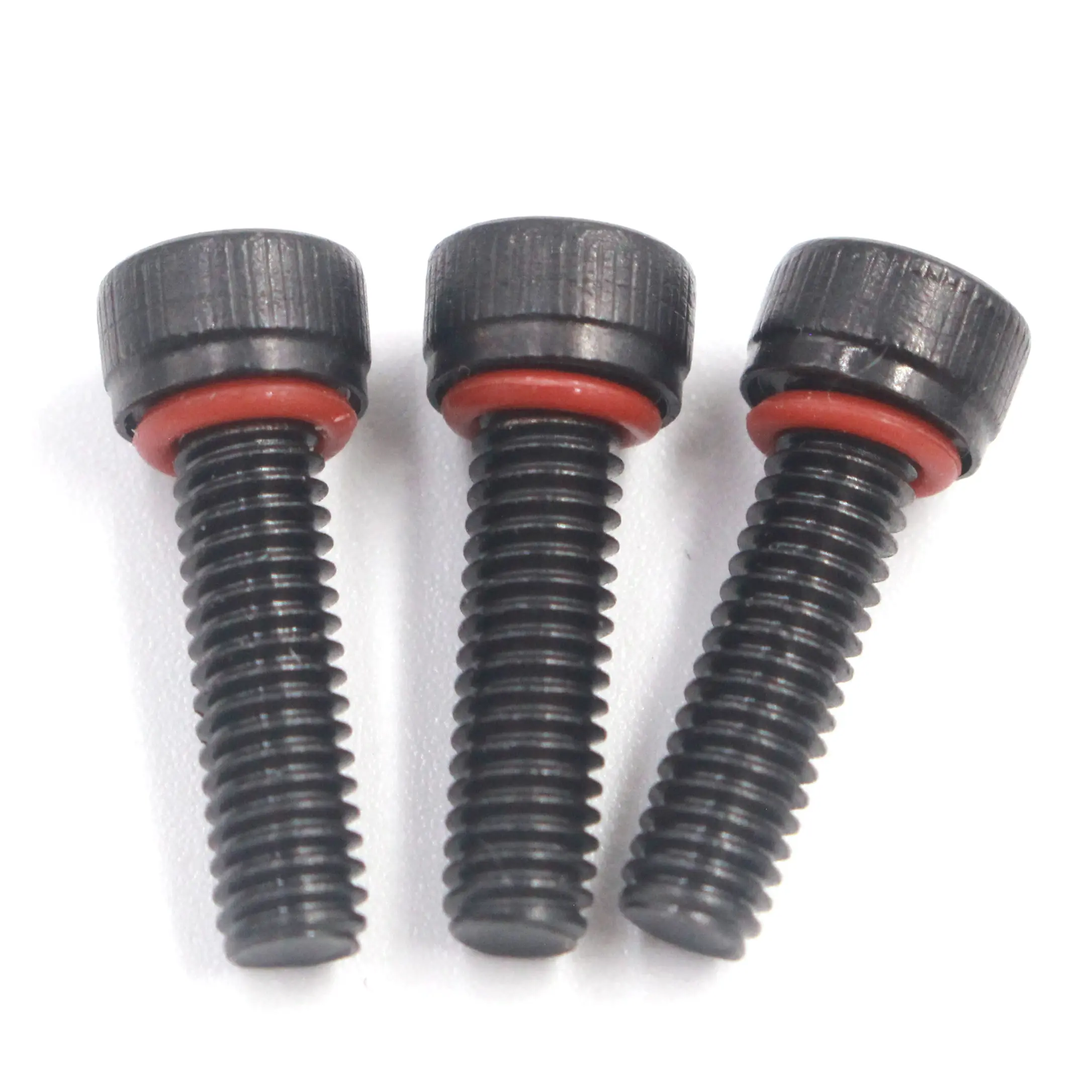
Superior Torque Transmission with Hexagon Socket Sealing Screws Design
The hexagon socket design of these sealing screws really stands out when it comes to transmitting torque in tough industrial settings. The reason? Those six contact points spread around the inside of the screw head create much better grip than traditional slotted designs. Some tests show these hex sockets reduce cam-out issues by nearly 90% when dealing with loads around 1,200 Newton meters. That kind of performance matters a lot in EV powertrain systems. When motors spin at high RPMs, every bit of lost torque translates into wasted energy, so having reliable connections throughout the assembly makes all the difference for manufacturers trying to maximize efficiency without compromising on durability.
Performance Comparison: Hex Socket vs. Slotted Sealing Screws at 1,200 Nm
| Metric | Hex Socket Screws | Slotted Screws |
|---|---|---|
| Torque Transmission | 98% efficiency | 71% efficiency |
| Tool Wear (100 cycles) | 0.02mm deformation | 0.15mm deformation |
| Installation Speed | 12 sec/fastener | 18 sec/fastener |
Design Strategies to Maximize Torque Efficiency and Drive Engagement
Manufacturers enhance performance through precision engineering:
- 12° tapered sidewalls enable self-centering drive engagement
- Micro-finished socket walls (Ra ≤ 0.8μm) reduce friction during insertion
- Radiused corners mitigate stress concentrations and extend tool life
This design allows accurate torque application in confined spaces—critical for modern battery pack assemblies requiring up to 200 Nm per connection point. The mechanical advantage of the hexagonal geometry ensures consistent, reliable fastening even in high-density layouts.
Material Selection and Mechanical Strength for Demanding Environments
Understanding Strength Grades: 8.8, 10.9, and 12.9 for Sealing Screws
The strength of sealing screws really comes down to their standardized grades. For instance, grade 8.8 has a minimum tensile strength around 800 MPa, whereas grades 10.9 and 12.9 go up to 1,000 MPa and 1,200 MPa. These higher grades work best in tough spots where stress is constant, think offshore drilling platforms for example. Recent research published in Material Selection for Extreme Conditions back in 2023 showed something interesting too. When companies switched from using grade 8.8 to the stronger 10.9 alloy steel, they saw about a third fewer shear failures happening in areas with lots of vibration. That kind of improvement makes all the difference in maintenance costs and safety margins over time.
Alloy Steel, Stainless Steel, and Titanium: Balancing Strength and Corrosion Resistance
Choosing the right material involves balancing strength, durability, and cost:
| Property | Alloy Steel | Stainless Steel (A2/A4) | Titanium Grade 5 |
|---|---|---|---|
| Tensile Strength | 1,200 MPa | 600–800 MPa | 900–1,100 MPa |
| Corrosion Resistance | Moderate | High | Exceptional |
| Cost Ratio | 1× | 2.3× | 6.1× |
As detailed in a machined components analysis, titanium’s strength-to-weight ratio makes it indispensable in aerospace despite its higher cost.
Cost vs. Performance Trade-offs in Industrial Material Choices
Environmental demands shape material economics. While stainless steel dominates marine hardware (67% market share) due to chloride resistance (Ponemon 2023), coated alloy steels are increasingly used in terrestrial applications to cut costs by 41% without compromising long-term durability.
Critical Applications in Heavy-Duty Machinery and High-Stress Systems
Reliability in Mining and Construction Equipment with High Vibration Loads
Mining equipment like drills and bulldozers often face intense vibrations, sometimes reaching around 28 Gs according to the 2024 Industrial Fastener Reliability Report. That's why hex socket sealing screws are so effective at preventing head stripping when these machines experience those powerful percussive impacts. Compared to regular Phillips head screws, their internal drive design works much better in harsh environments such as rock crushers and excavator tracks. We've seen firsthand how important this really is because when tools slip in these applications, it doesn't just cause downtime it creates serious safety hazards for workers on site.
Maintaining Clamping Force Stability in Dynamic Operating Conditions
Under alternating loads, hex socket sealing screws retain 98% of initial clamping force after 500,000 stress cycles—23% better than slotted variants. This stability stems from tight manufacturing tolerances (±0.01 mm), which limit micromovement in critical components like turbine housings and hydraulic press assemblies.
Case Study: Reducing Failure Rates in Hydraulic Systems Using Sealing Screws
A leading manufacturer reduced hydraulic valve failures by 42% over two years by switching to ASTM A574 sealing screws with integrated O-ring grooves. In forestry equipment operating at 3,000 PSI, this change increased mean time between failures (MTBF) from 1,200 to 2,050 hours, significantly improving system uptime.
Optimizing Thread Engagement Length for Maximum Load Capacity
For maximum joint strength, engineers recommend thread engagement lengths of 1.5 times the screw diameter—a ratio shown to achieve 92% of theoretical load capacity (2023 Fastener Engineering Guide). This optimization is vital in crane boom assemblies, where M24 screws must endure bending moments exceeding 12,000 Nm.
Environmental Resistance: Performance in Heat, Moisture, and Corrosive Conditions
Sealing Screw Durability in Marine and High-Humidity Environments
The latest corrosion resistant coatings have really improved how well sealing screws perform in those tough marine environments and places where there's lots of humidity. When we look at polymer based finishes, they cut down on oxidation by somewhere around 70% when compared with regular fasteners that haven't been treated. Tests show these coated screws can hold up for over a thousand hours in salt spray conditions according to research published in Nature back in 2023. What makes these coatings work so well is their ability to repel water, creating what engineers call hydrophobic barriers. These surfaces actually create contact angles with water droplets that measure over 115 degrees, which means water just rolls right off instead of soaking in. For applications where reliability matters most, some premium versions maintain about 92% of their original clamping force even after repeated exposure to changing humidity levels. That kind of performance makes these screws perfect for use on offshore oil platforms and along coastlines where traditional fasteners would fail much sooner.
Thermal Stability of Alloy Steel Screws Up to 450°C
Alloy steel sealing screws keep around 95% of their tensile strength even when heated to 450 degrees Celsius, which makes them much better than regular carbon steel options for high temperature applications. The special mix of chromium and molybdenum creates stable oxide layers that help fight off those pesky thermal expansion issues we often see in places like exhaust manifolds and turbocharger housings. When these screws go through about 500 thermal cycles from room temperature all the way up to 450C, they only change dimensionally by less than 0.2%. That kind of stability means they can maintain proper seals in industrial boilers and various engine systems without failing. What's really interesting is how phase stability stops the material from annealing during operation. Engineers have run finite element analyses on these components and found that stress distributes pretty evenly across the material despite the intense heat conditions.
Cross-Industry Applications in Automotive, Aerospace, and Precision Machinery
Advantages of Space-Saving Design and Alignment Accuracy in Tight Assemblies
Hex socket sealing screws work really well in tight spaces where precision matters most, think automotive transmissions or those complex robotic arm assemblies. The design actually cuts down on head height compared to regular hex bolts something like 25% according to Machinery Design Report from last year, and they still manage to keep around 98% accurate alignment when working with CNC machined components. For applications like hybrid car battery casings or delicate optical equipment, these tiny differences in measurement really count. A fraction of a millimeter can make all the difference between smooth operation and costly failures down the line.
Case Study: Socket Head Cap Screws in Aircraft Landing Gear Systems
According to a recent study from Aviation Components in 2024 that looked at over 18,000 flight cycles, there was a significant improvement when they optimized how threads engage in landing gear hinge joints. Clamping force stability went up around 60%, which is pretty impressive considering what these parts go through during flights. What makes these components stand out is their internal hex design that actually stops them from coming loose even when subjected to intense vibrations at 7G impact loads. This means maintenance doesn't need to happen as often anymore either – instead of every 250 hours like before, technicians can wait until 800 hours pass in those harsh environments where salt spray and corrosion are constant threats. Because of these advantages, aircraft manufacturers have started specifying these particular screws for critical areas such as retraction actuators and shock absorber mounts throughout modern fleets.
Lightweighting Trends in Aerospace Using Titanium Sealing Screws
The aerospace industry has turned to titanium sealing screws as a game changer, cutting down on weight by around 40% compared to traditional alloy steel according to findings from the Aerospace Materials Journal last year. These little components make all the difference when it comes to aircraft design. What's really impressive is how well they work alongside anaerobic sealants to keep fuel lines completely sealed even at extreme altitudes beyond 12,000 meters where pressure drops off dramatically. Looking at recent studies, there's something else going for these screws too. They handle temperature extremes remarkably well, maintaining about 90% of their initial tightening force after being subjected to no fewer than 500 cycles between frigid -55 degrees Celsius and scorching 230 degrees Celsius. This kind of performance makes them ideal candidates for installation right in the heart of aircraft engines where conditions are toughest.
Frequently Asked Questions
What are hex socket sealing screws?
Hex socket sealing screws are a type of fastener designed with a hexagonal socket that allows for more efficient torque transmission, reducing cam-out issues, and enhancing performance in industrial applications.
Why is the hexagon socket design advantageous?
The hexagon socket design provides superior grip and torque transmission through six contact points, making it highly effective in high-stress environments such as EV powertrains and heavy machinery.
What are strength grades for sealing screws?
Strength grades for sealing screws refer to standardized tensile strength classifications, including grades 8.8, 10.9, and 12.9, which indicate their capability to withstand various environmental conditions and stress levels.
What materials are ideal for sealing screws in corrosive environments?
For corrosive environments, materials like stainless steel and titanium are preferable due to their high corrosion resistance, although alloy steel offers better tensile strength.
Table of Contents
- Superior Torque Transmission with Hexagon Socket Sealing Screws Design
- Material Selection and Mechanical Strength for Demanding Environments
- Critical Applications in Heavy-Duty Machinery and High-Stress Systems
- Environmental Resistance: Performance in Heat, Moisture, and Corrosive Conditions
- Cross-Industry Applications in Automotive, Aerospace, and Precision Machinery