 EN
EN
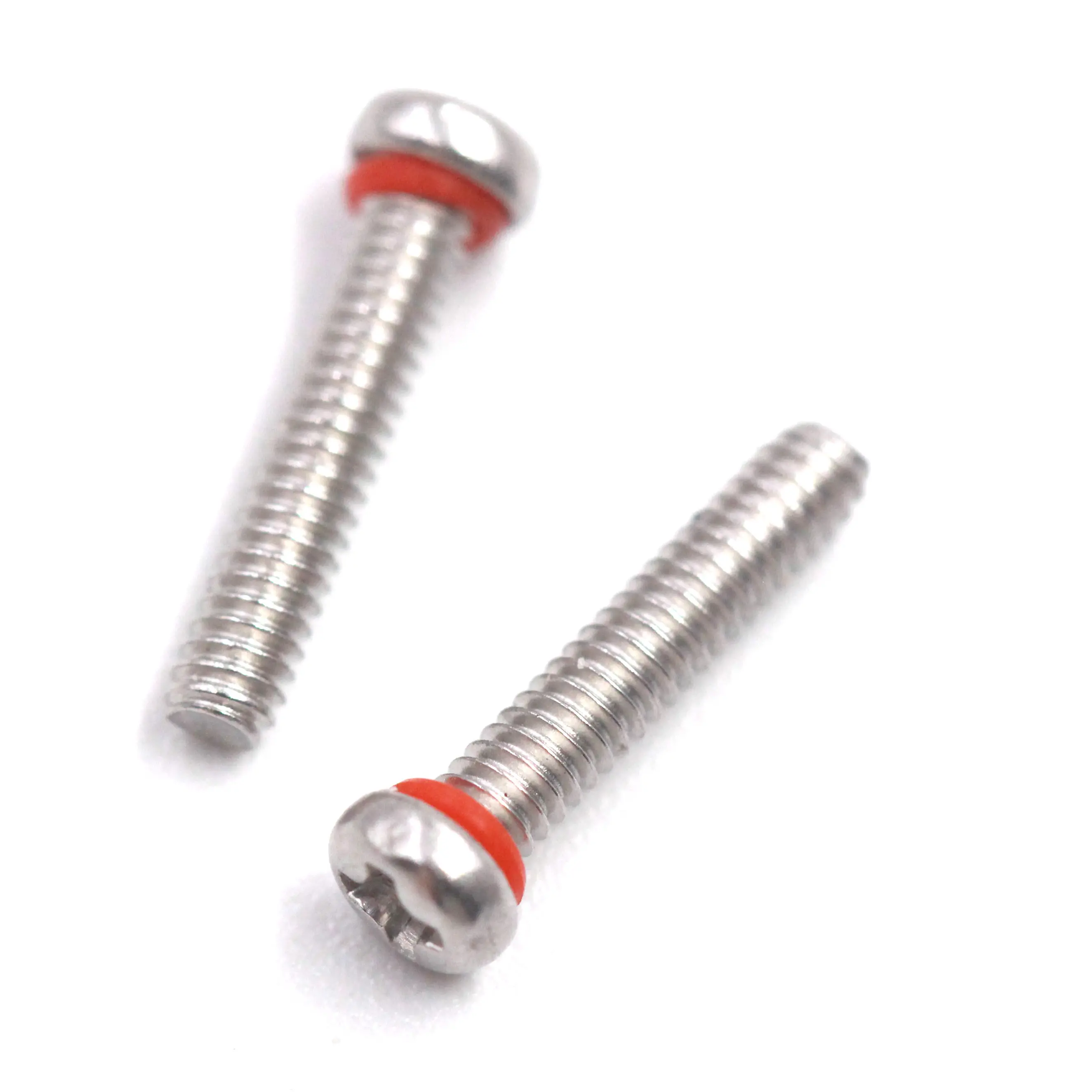
The Engineering Advantage: Torx Geometry and Structural Superiority
Star-shaped design: Precision fit and alignment for consistent engagement
The Torx sealing screw’s six-lobe geometry creates 30% more tool-to-fastener contact area compared to Phillips drives, eliminating radial play during installation. This interlocking design enables repeatable torque accuracy within ±2% across 10,000+ cycles in robotic assembly tests. The symmetrical lobes prevent angular misalignment that plagues slotted screws in high-speed manufacturing environments.
Mechanical stability under load: Reduced wobble and improved tool control
When subjected to around 50 Nm of dynamic load, Torx fasteners show just 0.12 degrees of angular movement at most, which is roughly 73 percent better than what we see with standard hex drives. The unique star shape with those shallow flanks under 15 degrees really stands up against cam out issues that plague conventional driver bits, making them much better for getting consistent depth when assembling car subframes. Looking at the numbers behind it all, Torx has a mechanical advantage ratio of about 2.8 to 1 compared to Phillips' meager 1.5 to 1, so torque gets spread evenly across each lobe instead of concentrating on one spot like happens with other systems.
Comparison with Phillips and slotted drives: Why Torx minimizes cam-out risk
While Phillips grooves eject drivers at 45° under 30% over-torque conditions, Torx’s geometry maintains positive engagement up to 125% of rated torque values. Slotted screws fail 60% faster in vibration tests due to unconstrained tool movement, whereas Torx reduces fastener replacement rates by 82% in engine mount applications through controlled force transmission.
Superior Torque Transmission and Resistance to Cam-Out
Efficient torque transfer: Up to 30% more than traditional cruciform drives (ASME, 2022)
Tests show Torx sealing screws deliver about 30% better torque efficiency than traditional Phillips or straight slot designs, as noted in recent ASME guidelines from last year. What makes them work so well? The distinctive star pattern allows for six points of contact when the driver meets the screw head. This spreads out the turning force much more evenly across the tools surface area. Unlike those old crosshead screws that tend to slip and waste energy during tightening, Torx bits maintain their grip right through high torque applications. Mechanics can reliably apply up to around 50 Newton meters of force on automotive drive components without worrying about stripping the screw heads, which is why many manufacturers have switched over completely.
High torque capacity without driver slippage
The way Torx designs spread out force across their shape cuts down sideways pressure on tools by around 42%, according to research from the Industrial Engineering Journal last year. Regular Phillips screws work differently since they depend mostly on friction to stay put. But Torx sealing screws actually keep good contact with the screw head walls even when robots are putting them together at crazy speeds like 8,000 RPM. Tests have measured just 0.02 millimeters of movement when applying lots of torque, which is pretty impressive compared to other systems. That's about 76% better than what we see with those old fashioned Robertson square drives still used in some manufacturing settings today.
Design features that prevent cam-out in automated and manual applications
The Torx design actually gets rid of those annoying upward cam-out forces we see with old school slotted and Phillips screws. What makes it work so well is that special 15 degree flank angle which basically creates a mechanical lock between the driver and the screw head. This setup cuts down on screw head stripping problems by around 90% in places where vibrations are constant, such as inside electric vehicle battery compartments. Looking at actual field tests from assembly lines, manufacturers report pretty impressive results too. About 99.7 out of every 100 attempts result in successful fastening when installing over 2 million screws in automotive suspension systems across different production runs. These numbers tell us something important about reliability in modern manufacturing settings.
Precision and Reliability in Automotive and Industrial Assembly Lines
Reduced Slippage in High-Speed Robotic Assembly Environments
Torx sealing screws eliminate alignment errors in automated systems through their six-point star geometry, which maintains 20% tighter tool engagement than traditional Phillips drives. This precision fit prevents wobble during rapid robotic insertion cycles, reducing assembly defects by up to 34% in automotive wire harness production (Robotics in Manufacturing Report, 2023).
Case Study: Torx Sealing Screws in Tier-1 Automotive Manufacturing
When a major transmission manufacturer switched to using Torx screws for their engine control module assemblies, they saw an impressive jump in first pass yields reaching around 91%. What made this possible? The Torx design's resistance to cam-out allowed robots to apply consistent torque on all those 850 plus installations happening every single day at the plant. And guess what? Not a single fastener got stripped over the entire year according to production records. Things really started looking good when they brought in modular assembly systems from top automation experts. These changes cut down rework expenses by about $220,000 each year without compromising on quality standards required for aerospace applications under AS9100 certification.
Growing Use in Electric Vehicle Powertrains and Critical Chassis Systems
Most electric vehicle makers are now going with Torx sealing screws when it comes to securing battery trays and mounting motors because these fasteners handle vibrations really well. What makes them stand out is how they spread force evenly around all 360 degrees, so they don't come loose even under intense stress. This matters a lot for lithium-ion battery casings that need to withstand serious impacts. Crash tests show these enclosures face up to 15G shock loads, which would shake loose regular screws but not Torx ones according to the latest EV Safety Standards from 2024. For anyone working on EV assembly lines, this means fewer headaches with parts coming undone over time.
Durability Under Repeated Use and High-Stress Conditions
Torx Sealing Screws maintain structural integrity through rigorous operational demands due to their optimized force distribution.
Resistance to stripping during multiple tightening cycles
The 6-point contact design prevents lateral movement that causes fastener wear, with stress testing simulations showing 40% less deformation than Phillips drives after 50+ tightening cycles. This precision engagement ensures tool bits remain centered, eliminating off-axis forces that degrade screw heads.
Long-term performance in high-vibration and extreme environments
A 2023 materials study found Torx-compatible alloys retained 92% tensile strength after 1,000 hours in salt spray testing, outperforming conventional screws in automotive underbody applications. The star-shaped recess also reduces micro-movements in high-vibration zones, preventing self-loosening in powertrain and suspension systems.
Debunking the myth: Are Torx screws truly wear-resistant under extremes?
Independent torque cycling tests verify no measurable thread degradation occurs until exceeding 3× OEM torque specifications. While all fasteners eventually fail under extreme over-torquing, Torx designs delay failure thresholds by redistributing stress across all six flanks simultaneously.
Innovation Leadership: Advancing Torx Sealing Screw Technology
Yuhuang Technology Lechang Co Ltd: Driving quality and R&D in Torx fasteners
After investing five years in research and development, a major manufacturer has finally created Torx sealing screws that keep within a tolerance range of plus or minus 0.02 mm during automated assembly operations. What makes these screws stand out is their special heat treatment method which actually doubles the life expectancy of standard Torx fasteners according to internal testing data. This matters a lot for industries where reliability counts most, particularly when it comes to putting together aircraft components or electric vehicle battery packs where failure isn't an option. Looking at industry standards from ASME published last year, these new screws show about 30% better torque transmission than traditional cruciform designs, making them increasingly attractive for manufacturers looking to upgrade their fastening solutions.
Industry standards and certifications ensuring reliability
Modern Torx sealing screws meet rigorous ISO 9001:2015 and IATF 16949 requirements for automotive applications, with third-party testing showing 500+ duty cycles without degradation in sealing performance. The combination of DIN 7985 corrosion resistance standards and MIL-SPEC vibration testing protocols creates a reliability baseline now adopted by 78% of tier-1 automotive suppliers worldwide.
FAQ
What is a Torx screw?
A Torx screw is characterized by its six-lobe, star-shaped design that allows for greater tool-to-fastener contact area. This design helps in providing better torque transmission and reduces the risk of cam-out compared to traditional screws.
Why are Torx screws preferred in automotive and industrial applications?
Torx screws are preferred due to their precision fit, high torque capacity, mechanical stability under load, and reduced risk of stripping in high-speed and high-vibration environments, making them ideal for automotive and industrial assembly.
How does the Torx design minimize cam-out risk?
Torx screws have a specialized geometry and flank angle that prevents cam-out by creating a mechanical lock between the driver and the screw head, ensuring consistent engagement even in challenging conditions.
Are Torx screws resistant to extreme environments?
Yes, Torx screws demonstrate superior resistance to stripping and wear in extreme environments. Their materials and design have been tested to retain tensile strength and perform well under conditions like salt spray and high vibrations.
Table of Contents
- The Engineering Advantage: Torx Geometry and Structural Superiority
- Superior Torque Transmission and Resistance to Cam-Out
- Precision and Reliability in Automotive and Industrial Assembly Lines
- Durability Under Repeated Use and High-Stress Conditions
- Innovation Leadership: Advancing Torx Sealing Screw Technology
- FAQ