 EN
EN

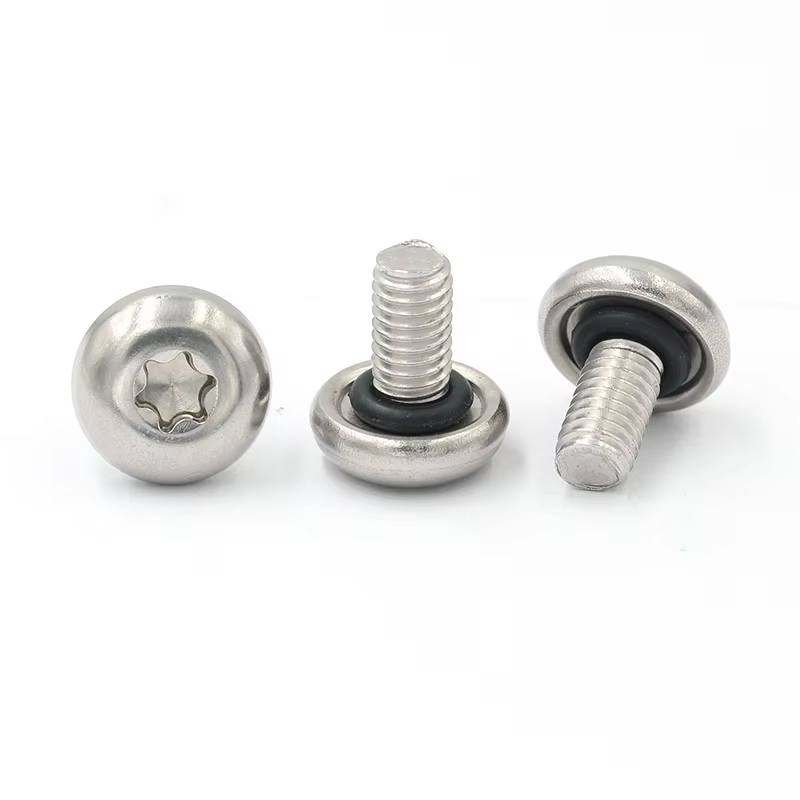
How M3, M4, M6, M8 Sealing Screws Prevent Corrosion in Demanding Applications
Understanding Corrosion-Resistant Fasteners and Their Structural Importance
Industries working in tough environments really need corrosion resistant fasteners. Think about places like ships at sea, chemical plants, or bridges standing against the weather. Regular screws just don't cut it when they're constantly getting wet, hit by chemicals, or dealing with extreme heat over time. These failures can lead to big problems down the road, sometimes even dangerous situations. That's why engineers turn to specific types like M3, M4, M6, and M8 sealing screws. These fasteners are built to last through all sorts of abuse without breaking down. A little bit of rust here and there might seem small, but it actually starts a chain reaction that leads to bigger issues later on. For systems where safety matters most, good materials and proper sealing aren't optional extras they're absolute requirements.
How Sealing Mechanisms in M3, M4, M6, M8 Screws Block Moisture and Corrosive Agents
Sealing screws in the M3 to M8 range typically incorporate rubber gaskets, nylon inserts, or special thread sealants to create watertight connections that stop moisture and corrosive substances from getting into mechanical joints. Take offshore platforms as one real world application where M8 screws frequently come with fluoropolymer coatings designed specifically to push back against saltwater intrusion. The sealing mechanisms work by closing those tiny gaps between threads which are basically doorways for chloride ions and acidic fumes to enter. Field tests indicate that when fasteners are properly sealed, they cut down on moisture penetration by around 95% over their unsealed versions. This makes a huge difference in how long equipment lasts before needing replacement or repair.
Material Selection for Optimal Performance Under Environmental Stress
| Material | Key Advantage | Typical Use Case |
|---|---|---|
| 316 Stainless | Chloride resistance | Marine, coastal environments |
| Titanium | Strength-to-weight ratio | Aerospace, chemical plants |
| PTFE-Coated | Chemical inertness | Pharmaceutical equipment |
Material selection really matters if we want something that lasts over time. Take 316 stainless steel for instance it contains molybdenum which gives it much better resistance against pitting and crevice corrosion in saltwater conditions compared to regular 304 grade steel. Then there's titanium, known for its amazing strength relative to its weight, plus it won't cause any problems when used alongside aluminum components since it doesn't suffer from galvanic corrosion issues. For situations involving harsh chemicals where reactions could spell disaster, PTFE coated fasteners work wonders as they form an inert protective layer that stands up to even the most aggressive environments without breaking down or reacting negatively.
Preventing Galvanic Corrosion Through Compatible Material Pairing
Galvanic corrosion happens whenever different types of metal come together in places where electricity can flow, such as saltwater environments. For M3 to M8 sealing screws, there are ways to reduce this problem. One approach is carefully choosing materials that work well together, like putting titanium fasteners with aluminum parts. Another option is adding insulation between the metals using washers made from materials like nylon or PEEK plastic. The industry standards, including ISO 9223, provide guidance on which metals should be paired together based on their chemical properties. This helps prevent rapid corrosion and makes sure the joints last longer over time.
Advanced Materials and Surface Treatments for Long-Lasting Corrosion Resistance

Stainless Steel, Titanium, and Polymer Options for M3–M8 Sealing Screws
The choice of materials depends on both the size of the screws and what they need to do. For smaller fasteners like M3 through M4, manufacturers often go with 316 stainless steel because it works well during machining while still standing up to corrosion pretty decently. When we get to bigger sizes around M6 to M8, things change quite a bit. Grade 5 titanium becomes popular especially in places like boats or airplanes where saving weight matters a lot but strength can't be compromised either. Speaking of alternatives, high performance plastics such as PEEK have been making waves lately in chemical processing environments. These materials just don't corrode when different metals touch them, which solves a big problem for many plants. Plus, they stay stable even when temps hit about 250 degrees Celsius, something regular metals would struggle with over time.
Evaluating Stainless Steel Grades for Strength and Anti-Corrosion Balance
When choosing between 304 and 316 stainless steel, chloride levels in the environment play a major role. Stainless steel grade 304 works fine for areas with minimal chloride exposure outdoors, typically below 500 parts per million. However, when dealing with coastal environments where chloride concentrations range from 1,000 to 3,000 ppm, stainless steel 316 becomes the better option thanks to its 2.1% molybdenum content that enhances corrosion resistance. For really harsh offshore conditions though, engineers often turn to duplex stainless steels such as 2205. These materials provide roughly twice the yield strength compared to standard 316 steel (around 450 MPa versus just 215 MPa) without sacrificing protection against crevice corrosion problems that can plague other alloys in saltwater environments.
Role of Surface Coatings: Passivation, Zinc Plating, and PTFE in Enhancing Durability
Post-production treatments enhance base material performance:
| Treatment | Protection Method | Real-World Results (1,000-hour test) |
|---|---|---|
| Passivation | Chromium oxide layer | <0.1% surface pitting in pH 3–11 |
| Zinc Plating | Sacrificial anode | 95% coating integrity in ASTM B117 |
| PTFE Coating | Non-stick barrier | 0% salt adhesion in marine exposure |
Passivation forms a protective chromium-rich layer on stainless steel, improving natural oxide stability. Zinc plating acts sacrificially to protect underlying steel, though it degrades faster in saline environments. PTFE provides a chemically inert, hydrophobic surface that resists salt buildup and abrasion.
Comparing Real-World Effectiveness of Different Finishing Treatments
Looking at actual field data from offshore wind installations shows a pretty clear ranking when it comes to material performance. PTFE coatings come out on top, followed by duplex passivation treatments, with zinc plating bringing up the rear. The numbers tell the story well enough zinc plated M8 fasteners started showing problems within just 18 months in those splash zone areas where saltwater gets everywhere. Meanwhile, parts treated with PTFE have held up remarkably well with no real signs of wear even after five full years. For underground components though, things look different. When working with buried infrastructure, combining silicone sealants with properly passivated stainless steel gives the best bang for buck across those long 25 year plus design periods that engineers typically plan for.
Performance of Sealing Screws in Harsh Environments: Marine, Outdoor, and Industrial Use

Challenges of Salt, UV, and Moisture Exposure in Marine and Outdoor Settings
The harsh realities of marine and outdoor settings mean equipment faces constant battle against nature's elements. Salt air eats away at metals faster than most people realize – sometimes over half a millimeter per year according to ISO standards in really bad coastal spots. The sun doesn't help either, breaking down those rubber seals we rely on so much. And let's not forget about all that moisture hanging around, which can cause serious problems when different metals touch each other. Good quality sealing screws fight back against all this damage. They're made with specially designed threads that hold tight even when things get rough. Many come with materials that stand up to sunlight without cracking or hardening. Plus there are these protective layers built right in that stop water and debris from getting where they shouldn't be.
Case Study: Reliability of Custom M8 Sealing Screws in Offshore Wind Installations
Research from 2023 looking at wind turbines in the North Sea showed something interesting about those special M8 sealing screws. When these screws had PTFE coating on their threads along with EPDM washers, they kept almost all corrosion away for nearly 18 months straight. What makes this really significant is that these components stopped salt water from getting into those flange joints where problems usually start. The result? Maintenance expenses dropped around 40 percent when compared against regular fasteners used in similar conditions. Looking at this data tells us something important about engineering solutions tailored specifically for particular applications. Such targeted designs not only make systems last longer but also cut down on long term expenses, which matters a lot for essential parts of our energy grid that need to function reliably year after year.
Environmental Corrosivity Standards (ISO 9223, AS3566) and Fastener Selection Guidelines
When picking fasteners for harsh environments, it's important to match them against the environmental severity ratings found in standards such as ISO 9223. This standard actually puts marine areas into what they call CX category, meaning really high corrosion risk. For installations in these tough spots, following AS 3566-2002 Class 3 specifications becomes critical because regular fasteners just won't cut it when exposed to all those chlorides in the air. The top manufacturers tackle this challenge by going with A4 (316) stainless steel at their core and then applying passivation treatments. These combinations typically last well beyond 1,000 hours in salt spray tests, which most people in the industry consider the minimum acceptable level for parts used in industrial settings where corrosion resistance matters most.
Mitigating Accelerated Corrosion With Proper Screw Design and Placement
Three key strategies improve corrosion resistance:
- Sealant Compatibility: Match butyl tape or silicone gaskets with head geometries to ensure full contact and compression
- Anti-Galvanic Design: Use titanium or composite screws when joining aluminum or copper substrates
- Advanced Coatings: Zinc-nickel or Dacromet® finishes outperform basic galvanization by a 3:1 margin in cyclic corrosion tests
Additionally, proper placement such as angling surfaces or incorporating drainage channels minimizes moisture pooling around screw heads and threads, reducing long-term corrosion risks.
Testing, Quality Assurance, and Compliance for Reliable Sealing Fasteners
The industry checks M3, M4, M6, and M8 sealing screws using three main tests. First comes salt spray testing according to ASTM B117-23 standards, which basically mimics what happens when these components are exposed to salty air near coastlines. Then there's Kesternich testing following DIN 50018 guidelines that recreates those harsh acidic conditions found in many industrial settings. Lastly, humidity cycling is performed to see how well the seals hold up when temperatures change repeatedly. To make sure products work properly across different regions, manufacturers follow both ISO 9223 and AS3566 specifications. This includes tracking materials at the batch level, getting independent confirmation on surface treatments from outside experts, and going through annual audit processes to maintain certification status.
Independent studies confirm custom M8 sealing screws endure over 1,000 hours of continuous salt spray (ASTM B117-23) without failure. This resilience stems from synergistic design elements: optimized thread geometry to minimize crevice corrosion, passivated 316L stainless steel bodies, and compression-controlled sealing washers that prevent galvanic contact between dissimilar metals.
Customization Benefits: Why Tailored M3–M8 Sealing Screws Outperform Off-the-Shelf Options
Designing Application-Specific Fasteners for Optimal Fit, Seal, and Longevity
The problem with regular fasteners just isn't solved properly until we look at custom M3 to M8 sealing screws. These specialized components tackle real world issues that plague many industrial applications including constant vibration, repeated heating and cooling cycles, plus exposure to harsh chemicals. Take HVAC systems for example. When temps swing between minus 40 degrees Celsius all the way up to 120 degrees, ordinary screws simply can't hold up. That's why engineers specify these special screws with built-in rubber seals. They keep everything compressed tightly even through extreme temperature changes, stopping those pesky refrigerant leaks that drive maintenance crews crazy when standard hardware gives out too soon.
Tailoring Thread Geometry, Head Type, and Sealing Features for Industry Needs
Precision customization enhances corrosion resistance through targeted design:
- Thread Pitch: Micro-grooved threads on M4 screws reduce galvanic stress in aluminum enclosures
- Head Profile: Low-profile M6 hex heads with built-in washers prevent saltwater ingress in marine pumps
- Seal Integration: Dual treatments like PTFE coating plus passivation on M8 screws create layered protection against acidic fumes in chemical processing
These tailored features ensure reliable performance in demanding contexts where off-the-shelf solutions fall short.
Reducing Maintenance and Lifecycle Costs with Customized Corrosion-Resistant Screws
According to a recent 2023 industry report, companies using custom made M3 to M8 screws actually spend about 37% less overall than those sticking with standard off-the-shelf options. Why? Well, there are basically two main reasons. First, these specialized fasteners just last much longer between replacements. Take wastewater treatment plants for instance, where custom screws typically hold up 2.4 times longer than regular ones before needing to be swapped out. Second, they're far more reliable because they come with locking features designed specifically for each application. These special designs stop around 92% of all problems caused by vibrations making screws work loose over time. When engineers tailor fastener specs exactly to what their environment throws at them, they get this kind of long lasting protection against corrosion that simply isn't possible with run-of-the-mill hardware.
FAQs
What is the main advantage of using M3, M4, M6, and M8 sealing screws?
M3, M4, M6, and M8 sealing screws provide durability in harsh environments by blocking moisture and corrosive agents, thus preventing corrosion and extending the lifespan of the equipment.
Why are specific materials like 316 Stainless and Titanium used in fasteners?
Materials like 316 Stainless Steel offer chloride resistance, making them suitable for marine environments, while Titanium offers a great strength-to-weight ratio, making it ideal for aerospace and chemical plants.
How do sealing mechanisms in screws work?
Sealing mechanisms include rubber gaskets, nylon inserts, or special thread sealants that create watertight connections, preventing moisture and corrosive substances from entering mechanical joints.
Why is customizing fasteners advantageous over using off-the-shelf options?
Customized fasteners are specifically designed to withstand particular environmental stresses and conditions, reducing maintenance and lifecycle costs while enhancing performance and reliability.
What standards ensure the quality and performance of sealing screws?
Standards like ISO 9223 and AS3566 ensure that sealing screws meet specific environmental severity ratings, providing guidance for material selection to prevent corrosion and other issues in harsh settings.
Table of Contents
- How M3, M4, M6, M8 Sealing Screws Prevent Corrosion in Demanding Applications
-
Advanced Materials and Surface Treatments for Long-Lasting Corrosion Resistance
- Stainless Steel, Titanium, and Polymer Options for M3–M8 Sealing Screws
- Evaluating Stainless Steel Grades for Strength and Anti-Corrosion Balance
- Role of Surface Coatings: Passivation, Zinc Plating, and PTFE in Enhancing Durability
- Comparing Real-World Effectiveness of Different Finishing Treatments
-
Performance of Sealing Screws in Harsh Environments: Marine, Outdoor, and Industrial Use
- Challenges of Salt, UV, and Moisture Exposure in Marine and Outdoor Settings
- Case Study: Reliability of Custom M8 Sealing Screws in Offshore Wind Installations
- Environmental Corrosivity Standards (ISO 9223, AS3566) and Fastener Selection Guidelines
- Mitigating Accelerated Corrosion With Proper Screw Design and Placement
- Testing, Quality Assurance, and Compliance for Reliable Sealing Fasteners
- Customization Benefits: Why Tailored M3–M8 Sealing Screws Outperform Off-the-Shelf Options
- Designing Application-Specific Fasteners for Optimal Fit, Seal, and Longevity
- Tailoring Thread Geometry, Head Type, and Sealing Features for Industry Needs
- Reducing Maintenance and Lifecycle Costs with Customized Corrosion-Resistant Screws
-
FAQs
- What is the main advantage of using M3, M4, M6, and M8 sealing screws?
- Why are specific materials like 316 Stainless and Titanium used in fasteners?
- How do sealing mechanisms in screws work?
- Why is customizing fasteners advantageous over using off-the-shelf options?
- What standards ensure the quality and performance of sealing screws?